


Dating a trombone by serial number can be confusing, especially with changes in manufacturing eras, factory relocations, and shifting model lines. Over the past 15 years, The Brass Exchange has examined and photographed more than 5,000 trombones, including vintage, professional, and custom instruments from Conn, King, Bach, Holton, Olds, Greenhoe, S.E. Shires, Edwards, Getzen, Yamaha, and many other makers — with more than 2,400 documented in just the past five years. This hands-on experience has created one of the most practical real-world reference libraries in the industry.
This guide brings together the information players ask us for most: where to find the serial number, how different manufacturers structured their numbering systems, how to tell production decades apart, and what physical design features help confirm accurate dating. Whether you're identifying a family instrument, evaluating a collection, or preparing a horn for sale or restoration, this page is designed to be a clear, reliable, photo-verified reference for every major trombone brand still played today.
Most trombones can be dated using a serial number stamped on the neck receiver, bell section, or hand slide. However, placement and numbering systems vary widely by maker and production era, which is why visual confirmation — engraving style, brace design, wrap layout, and build details — is essential for accurate identification.
The Brass Exchange has been a trusted trombone resource for players and collectors since 2010. As an authorized S.E. Shires Pro Shop since before the Eastman acquisition, and with thousands of instruments personally inspected, photographed, and sold, our shop specializes in identifying, dating, and evaluating vintage and professional trombones.
Many musicians, educators, estate managers, and collectors contact us for help with trombone serial-number lookup and valuation. This guide explains where to locate serial numbers on your instrument, how to interpret them correctly, and what they reveal about your trombone’s production era and history.
✨ Purpose of This Guide:
This resource was created to help musicians, collectors, educators, and families identify, date, and understand the history of their trombones — whether for restoration, insurance appraisal, sale, or historical preservation. It reflects the real-world experience of The Brass Exchange in examining thousands of vintage and professional trombones from every major maker.
Common Trombone Serial Number Locations (Quick Reference):
- Conn – Outer hand slide
- King (H.N. White) – Outer hand slide or tuning slide
- Bach – Hand slide cork barrel
- Holton – Neck receiver
- Yamaha – Neck receiver
Serial number placement can vary by production era and model type, so confirming the location with bell engraving style, brace design, and other physical features is always recommended for accurate dating.
How to Identify the Age of a Trombone
Trombones can often be dated by their serial numbers, which are typically located in one of several places on the instrument:
Hand slide (usually at the back)
Neck receiver (where it attaches to the hand slide)
Tuning slide (found on some older King trombones from the H.N. White era)
Vintage Trombone Brands and Their Serial Number Locations
Here are some of the most common vintage trombone brands that The Brass Exchange encounters. For each maker, we first show where the serial number is typically located, followed by notes about variations by production era. More detailed serial-number dating tables appear later in this guide.
Conn Trombones (Pre-1970)
Serial numbers on vintage Conn trombones are most often found on the lower portion of the outer hand slide, usually below the slide tenon. The bell section generally does not carry a serial number, though the model number is typically engraved on the bell.
Conn serial numbering systems changed several times across production eras, so confirming the engraving style and construction details is important when dating an instrument.
More info: Conn Loyalist Website
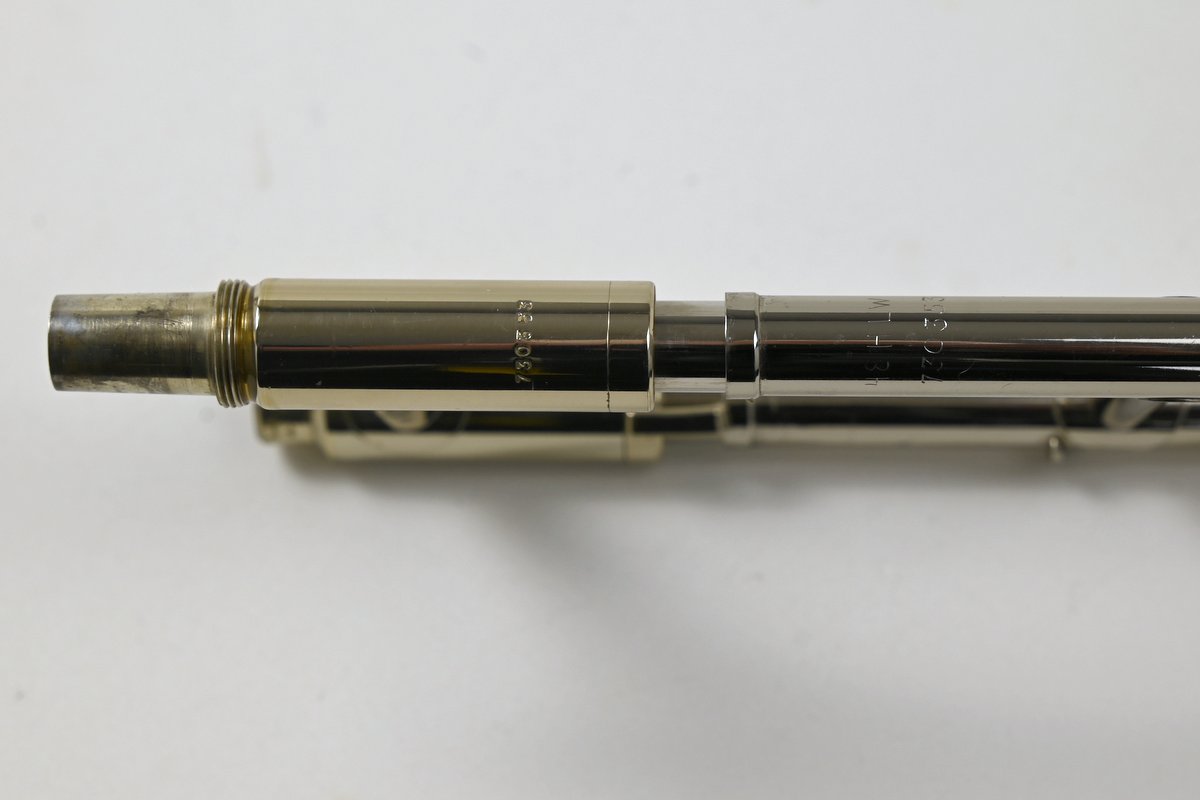
Conn trombone serial numbers can usually be matched to an exact production year using published Conn factory records such as the Conn Loyalist database. Because Conn changed numbering systems several times, grouping serial numbers into production eras helps players understand where their instrument fits historically.
Conn Brass Serial Number Guide (Simplified for Trombones)
| Serial Number | Year / Era | Notes |
|---|---|---|
| 1 – 68,668 | 1876–1900 | Early Conn production |
| 68,668 – 200,000 | 1900–1920s | Pre-Elkhart expansion |
| 200,000 – 350,000 | Late 1920s–1940 | Early Elkhart era |
| 350,000 – 500,000 | 1940–1955 | Pre-letter prefix era |
| 500,001 – 949,465 | 1955–1962 | Classic Elkhart Conn trombones |
| Letter Prefix (C, E, H, K, L, M, N, P, R) + 5 Digits | 1963–early 1970s | Elkhart Final Production Years |
| GA-Prefix Numbers | Mid-1970s–1980s | Abilene / later production |
Conn serial numbers often provide an exact year of manufacture, but always confirm the date with bell engraving style, model number, and construction details. Slides and bell sections are sometimes mixed from different instruments, which can lead to confusion when dating vintage trombones.
These ranges are based on Conn historical records and cross-checked with thousands of instruments examined and photographed at The Brass Exchange.
King Trombones (Pre-UMI Era)
Serial numbers on H.N. White–era King trombones are usually stamped on the outer hand slide below the cross brace or on the lower cork barrel. Earlier models may also include a serial number on the tuning slide.
Because King used different serial sequences for professional and student instruments, visual inspection of model features — such as bell brace style and engraving — is important for accurate dating.
More info: H.N. White Serial Numbers H.N. White Serial Numbers

King trombone serial numbers can usually be matched to an approximate production period using H.N. White and Conn-Selmer factory records. Because King production spans several ownership eras, grouping serial numbers into historical periods helps players understand where their instrument fits.
King Trombone Serial Number Guide (Simplified)
| Serial Number | Year / Era | Notes |
|---|---|---|
| 1 – 78,000 | 1890s–1925 | Early H.N. White production |
| 78,001 – 220,000 | 1925–1940 | Cleveland “Golden Era” Kings |
| 220,001 – 340,000 | 1940–1955 | Wartime and post-war production |
| 340,001 – 406,500 | 1955–1965 | Classic H.N. White era |
| 406,501 – 511,750 | 1965–1975 | Eastlake transition period |
| 511,751+ | Late 1970s onward | UMI / Conn-Selmer era |
Exact year lookup is possible using factory serial-number charts, but always confirm with bell engraving style, model number, and construction details.
⭐ Important Note About Student vs Professional King Trombones
King used different serial-number sequences for many student instruments, so serial numbers alone do not determine whether a King trombone is a professional model.
One quick visual check is the main bell brace:


- Curved brace following the bell contour → usually a professional King trombone
- Straight brace across the bell → usually a student model such as the King 606
A known exception is early King Tempo models, which may have a curved brace but are still student instruments if the engraving reads “Tempo.”
Always confirm using model engraving, bell size, slide construction, and overall build details.
These ranges are based on H.N. White and Conn-Selmer factory records and cross-checked with hundreds of King trombones examined and photographed at The Brass Exchange.
Holton Trombones
Holton trombone serial numbers are typically located on the neck receiver. Placement is generally consistent across eras, though model markings and engraving styles help confirm production decade.
More info: Holton Loyalist Website Holton Loyalist Website

Bach Serial Number Era Guide
Bach trombone serial numbers can usually be matched to a production year using Vincent Bach and Conn-Selmer factory records. Because Bach production spans several factory locations and ownership periods, grouping serial numbers into historical eras helps players understand where their instrument fits.
Bach Trombone Serial Number Guide (Simplified)
| Serial Number | Year / Era | Notes |
|---|---|---|
| Under ~6,000 | Late 1920s–1953 | New York production |
| ~6,000 – ~25,000 | 1953–1965 | Mt. Vernon era |
| ~25,000 – ~100,000 | 1964–late 1970s | Elkhart Corporation era |
| ~100,000+ | 1980s onward | Modern Conn-Selmer production |
Most Bach trombones produced from about 1964 through the late 1970s carry the “Corporation” engraving, which corresponds to the early Elkhart production period following the move from Mt. Vernon.
Important Notes About Bach Serial Numbers
- Bach serial numbers beginning with letters usually indicate student or intermediate instruments and do not follow professional Stradivarius serial-number charts.
- Exact year lookup is possible using factory records, but always confirm with bell engraving, slide construction, and model features.
- Slides and bell sections are sometimes mixed from different instruments, which can lead to confusion when dating older Bach trombones.
These ranges are based on Vincent Bach and Conn-Selmer factory records and cross-checked with hundreds of Bach trombones examined and photographed at The Brass Exchange. Bach Loyalist Website
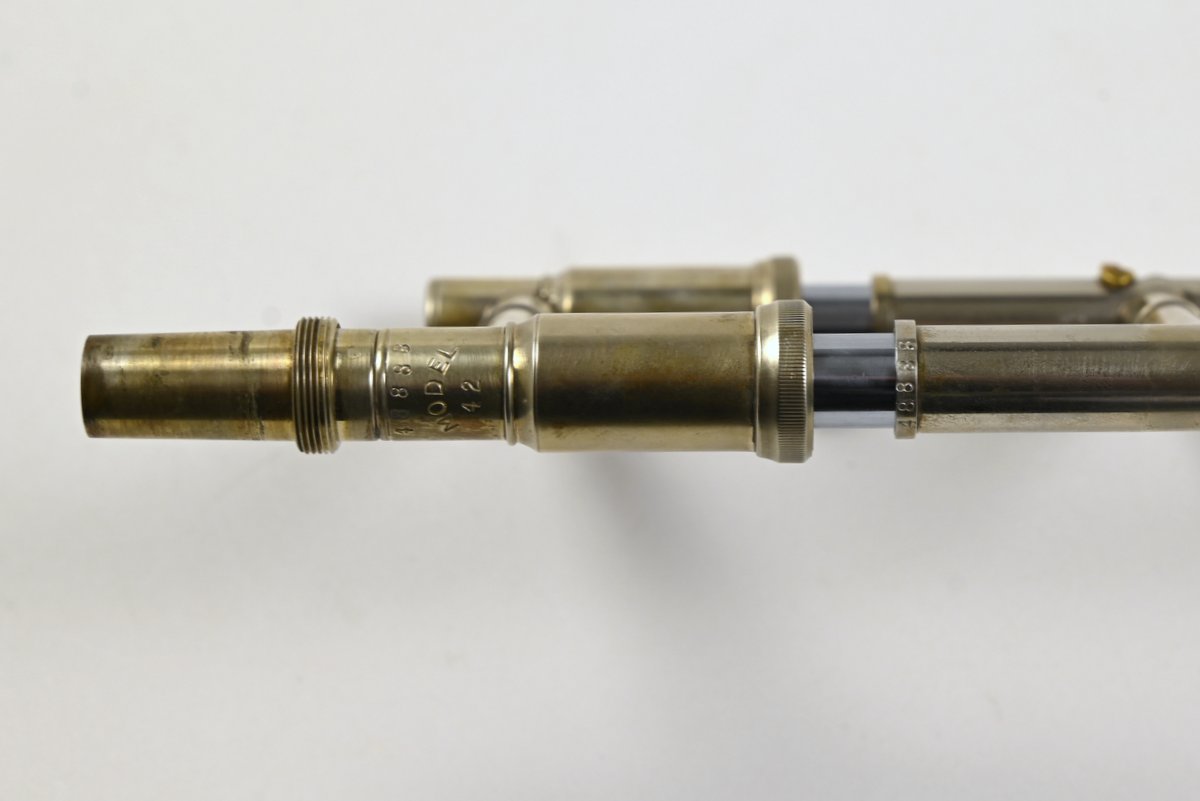
Olds Trombones (F.E. Olds & Sons)
For professional-model Olds trombones, the serial number is typically found on the back of the hand slide just below the threaded nut. Olds was a renowned California maker active from the early 1900s through the late 1970s.
The Brass Exchange was fortunate to sell the final instrument ever produced by Olds — an Olds “Super” model — supported by a verified company letter dated July 30, 1979. Olds "Super" – The Last Ever Made.
Explore additional Olds trombone examples from our archive, including Fullerton-era models and late-production instruments that reflect the final years of the company.
🔎 View the Olds Historical Collection

All serial-number photos shown here were taken in our shop using instruments we’ve handled personally — ensuring accuracy and consistency.
Other Trombone Makers
While Conn, King, Holton, and Bach are some of the most commonly encountered vintage trombone brands, there are many other makers whose instruments can be dated using serial numbers. This guide also serves as a trombone serial number lookup reference for less common brands.
Getzen Trombones
Serial numbers are often located on the tuning slide or near the neck receiver. Getzen's serial number systems may vary by production era, so it's helpful to cross-reference the serial number with production records for more accurate dating.
More info: Getzen Website
Edwards Instrument Co.
Early Edwards trombones placed serial numbers on the outside of the valve casing only. These custom-built trombones are known for their craftsmanship and precision. Edwards is a top choice among many professional orchestra players in the United States.
More info: Edwards Instrument Co. Website
Jupiter and XO Trombones
Both Jupiter and XO trombones typically place the serial number on the neck receiver.
More info: Jupiter Website
More info: XO Trombones Website
Selmer Trombones
Selmer trombones were made in France prior to the Conn-Selmer acquisition. Vintage Selmer trombones often have serial and model numbers located on both the hand slide and the neck receiver. Model numbers are often placed on the slide tenon — for example, "Bolero" or "Largo" on professional models.
Greenhoe Trombones
Greenhoe trombones place the serial number on the neck receiver, not on the hand slide. These instruments are known for their precision craftsmanship and are highly valued by professional trombonists.
More info: Greenhoe Trombones Website
S.E. Shires Trombones
S.E. Shires typically places the serial number on the neck receiver for both straight tenor trombones and F-attachment trombones. Recently, they began adding serial numbers to the hand slide as well. For their Q Series trombones, however, the serial number is located only on the neck receiver.
More info: S.E. Shires Website
Yamaha Trombones
Yamaha places the serial number on the neck receiver. The model number is also found on the neck receiver, beginning with the prefix "YSL" for tenor trombones and "YBL" for bass trombones.
More info: Yamaha Website
Other Notable Makers
Many smaller or regional trombone makers also produce instruments with serial numbers on various parts of the trombone. It is always a good idea to consult specific manufacturer archives or databases to ensure accurate identification and support your trombone model identification efforts.
Expert Recap: Additional Resources 📚
Looking to go deeper into trombone history or verify the age of your instrument? The Brass Exchange has documented thousands of vintage and professional trombones — including detailed photos of serial numbers, bell engravings, and design variations — in our Archive of Sold Instruments. 🏆
This growing resource serves as both a trombone serial number lookup and a living reference library for players, collectors, and educators who want accurate dating and identification information. Each listing was photographed, described, and verified by our shop — giving you reliable examples from real instruments handled here since 2010. 🔎
You can explore it here: Archive of Sold Trombones.
Here are some of the most common questions we hear from trombone owners, players, and collectors who reach out to us for help.
Where can I find the serial number on my trombone?
Usually on the neck receiver or hand-slide cork barrel. Older Conn and King models may have it on the tuning slide as well.
Does the serial number reveal the exact year?
It provides a date range that identifies production era and model lineage. Combine the serial with physical features like bell engraving or wrap design for precise dating.
Does serial placement affect value?
Not directly, but certain patterns (Elkhart, Mt. Vernon, H.N. White) correspond with more collectible periods — which can impact desirability.
Contacting The Brass Exchange ✍️
If you have a unique or interesting trombone and need assistance determining its age or history, The Brass Exchange is here to help. Simply reach out via phone or email with photos of your instrument, and we’ll guide you through identifying its details.
Many visitors who contact us for trombone serial number identification also choose to sell or consign their instruments through The Brass Exchange. We work with a wide range of sellers — including active players, private collectors, retired musicians, parents of former students, and estate representatives looking to find a new home for a family instrument.
While consignments are typically best suited for professional or higher-value instruments — often $2,500 and above — we encourage anyone with a trombone or brass instrument to reach out. Many players and families contact us with individual instruments below that range, and in those cases we often make direct purchase offers instead of consignments.
We also work frequently with collectors, estates, and educators who have multiple instruments to evaluate; in those situations, total collection value often exceeds our standard consignment minimum. Every situation is different, and we’re always glad to help determine the best approach.
Our extensive experience and commitment to sharing accurate, useful information make The Brass Exchange a trusted resource for trombone enthusiasts — whether you’re looking to buy, sell, or learn more about your trombone. 🏆
You can also browse our current trombone listings 🔎
or explore historical collections 📚.
👉 Have a Bach, Conn, or King trombone and wondering about value? Contact us for a valuation and explore your options ✍️.
✉️ Contact The Brass Exchange to discuss your instrument or collection — expert help is only a message away.
Authored by Doug Bert, Founder & Curator of The Brass Exchange
Last updated: April 24, 2026